

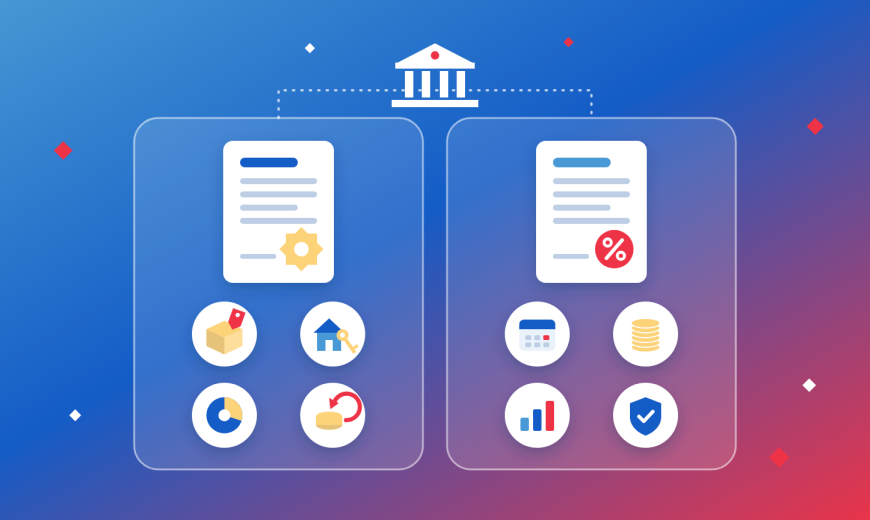
Islamic lending on one core banking system: how banks run Murabaha, Ijara and conventional loans side by side, with rebates and a full audit trail

See how a loan management system runs every stage of the loan lifecycle on a core banking platform, from origination and limits to collections.

What collateral management in banking is, the main types of collateral, the six stages of the lifecycle, and what a collateral management system does.

Embedded lending is credit offered inside a non-financial company’s customer journey, at the moment the customer needs it: installments at an online checkout, working capital inside a merchant’s dashboard,...

Embedded finance and Banking as a Service (BaaS) are closely related, but they are not interchangeable.

Composable banking architecture explained: the components, where the boundaries fall, how it compares with monolithic and modular cores, and how to implement it.

Composable banking is an approach that emphasises flexibility and agility by allowing banks to assemble and reassemble modular banking capabilities quickly and easily. Each capability is an independent component...

a Saudi bank cannot launch a sharia compliant BNPL product by adding a Sharia wrapper to a conventional instalment loan. The Murabaha contract has to be a native contract type in...

In today's financial services landscape, more institutions than ever are holding a banking licence and preparing to serve their first customer. Across the Gulf, Egypt, Türkiye and Central Asia,...

For financial institutions, fintech companies, and technology platforms building the next generation of credit infrastructure, understanding XNPL is essential.