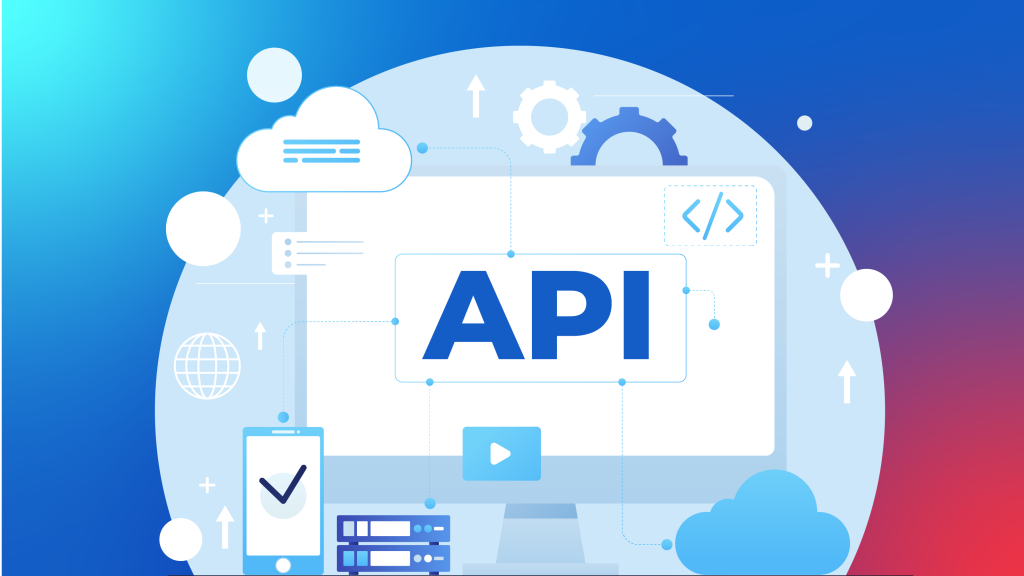
The term “API-first” has become standard vocabulary in banking technology discussions, but it is used with widely varying degrees of precision. For many, it simply means that a system has an API. Which in 2026 describes virtually every piece of enterprise software. For those who understand the term correctly, API-first is a specific architectural philosophy that changes the fundamental design of a banking platform: the API is the primary product, the primary interface, and the primary design contract around which everything else is built.
For CTOs and technology leaders at financial institutions and at the non-financial companies building on top of banking infrastructure; this distinction matters enormously. An API-first banking platform enables capabilities that an API-enabled platform simply cannot provide, and the competitive implications of that difference are growing as open banking regulation, BaaS models, and embedded finance become standard features of the financial services landscape.
The Precise Meaning of API-First
API-first architecture means that the API is designed and built before the implementation behind it. When a new banking capability is being developed; a new payment type, a new product structure, a new reporting function; the first step is designing the API contract: what inputs the endpoint accepts, what outputs it returns, what error conditions it handles, and how it will be versioned. Determining the implementation behind that contract after the contract is established, not the other way around.
This sequence sounds like a technicality, but it has profound implications for the system that results. When the API is designed first, it is designed to be used by external partners, by third-party developers, by internal product teams who will build on top of it. It is designed with the consumer’s perspective in mind. When the API is added after the implementation, it tends to reflect the internal structure of the implementation rather than the needs of the consumer, resulting in APIs that are awkward to use, incomplete in coverage, and inconsistent across capabilities.
The API as the Primary Product
In a genuinely API-first banking platform, the API is not a feature of the product; it is the product. The mobile app, the internet banking portal, the teller system, and the partner integration all consume the same API. There is no privileged internal interface that the API is a reduced version of. Every capability accessible to any user, through any channel, is accessible through the API.
This design principle has a crucial implication for openness: if the institution’s own products are built on the API, opening the API to external partners does not require creating new capabilities or building new interfaces. It requires only providing access to what already exists. Open banking compliance, BaaS enablement, and partner ecosystem development become extensions of the existing product rather than separate technical programmes.
API-First vs. API-Enabled: Why the Difference Matters
The distinction between “API-first” and “API-enabled” is the most important conceptual clarification in banking API strategy. Most legacy core banking platforms have been API-enabled over the past decade: API layers have been added, typically through integration middleware, to expose selected functions to external consumers. This approach has significant limitations:
- Coverage is incomplete. API-enabled platforms expose only the capabilities that were worth the effort of wrapping. Many functions remain accessible only through proprietary internal interfaces.
- Interfaces are inconsistent. Each API was designed by a different team at a different time, reflecting different underlying data structures. There is no consistent data model, authentication approach, or error handling convention across the API surface.
- The APIs are fragile. Because they wrap rather than replace the internal implementation, changes to the core system can break the API wrappers unpredictably. API consumers face unexpected breaking changes.
- Constrained performance. Middleware layers add latency. For real-time use cases; credit decisioning at checkout, fraud detection at transaction time; this latency can be disqualifying.
API-first platforms avoid these problems because the API is designed as part of the system, not added to it. The coverage is complete because every function was designed as an API from the outset. The interfaces are consistent because they follow a unified design philosophy from the beginning. The APIs are stable because they are the contract that the internal implementation must honour, not a wrapper that depends on internal structure.
The Technical Architecture of an API-First Banking Platform
Layer 1: Identity and Security
The security layer is the gateway through which all API consumers are authenticated and authorized. In an API-first banking platform, this layer implements OAuth 2.0 and OpenID Connect for consumer authentication, mutual TLS for service-to-service security, and fine-grained, attribute-based authorisation that controls which consumers can access which API capabilities and which data.
The security layer must support multiple consumer types simultaneously: end customers accessing their own account data through third-party apps, partner companies integrating payment capabilities, internal applications consuming the same API as external ones, and BaaS customers operating on behalf of their end users. Each consumer type has different authentication requirements and different authorisation scopes.
Layer 2: API Gateway
The API gateway is the traffic management and policy enforcement layer. It handles rate limiting; preventing any single consumer from overloading the platform; request transformation and validation, traffic routing to appropriate backend services, response caching, and comprehensive analytics. The gateway provides the operational control plane for the entire API ecosystem: the team responsible for API operations uses the gateway to manage consumer access, monitor traffic patterns, enforce SLAs, and respond to security events.
Layer 3: Core Banking API Services
This is where the banking capabilities live. Each capability; accounts, payments, lending, Islamic finance, trade finance, compliance, reporting; is exposed as a set of documented API endpoints. The design of these endpoints follows the API-first principle: they are designed for use by any authorized consumer, with consistent data models, predictable error handling, and comprehensive documentation.
For GCC and African markets, the core banking API services must include Islamic finance endpoints natively; not as an add-on module, but as first-class API capabilities alongside conventional banking functions. Murabaha origination, Ijara management, and Wakala investment account operations should be as well-documented and accessible as conventional loan origination and standard account management.
Layer 4: Event Streaming
A modern API-first banking platform complements its synchronous REST API with an asynchronous event streaming capability. Banking events; payment received, credit limit breached, account opened, instalment due; are published to a streaming platform (Apache Kafka is the standard implementation) and made available for subscription by internal services and external consumers.
Event streaming enables use cases that synchronous APIs cannot efficiently support: real-time fraud detection systems that need to see every transaction as it occurs, regulatory reporting systems that need a complete audit trail of all events, partner systems that need to be notified of customer activity in real time, and AI models that need to score transactions at the moment they happen.
Layer 5: Developer Portal and Experience
The developer portal is the front door to the API ecosystem. It provides comprehensive documentation in OpenAPI 3.0 format, interactive API exploration tools, a sandbox environment where developers can test integrations against realistic data without affecting production systems, API key management, usage analytics for API consumers, and support resources.
The developer portal is where the competitive quality of an API-first banking platform is most directly experienced. A platform with comprehensive documentation. A fully functional sandbox, and a responsive support team will attract partners and BaaS customers. In which a platform with poor developer experience will lose to competitors, regardless of the underlying banking capabilities.
API-First Banking and Regional Regulatory Requirements
CBUAE Open Banking Framework
The Central Bank of the UAE’s open banking policy requires licensed financial institutions to expose customer data and payment initiation capabilities. To authorized third parties through standardized APIs. This regulation directly mandates API-first capabilities for UAE banks. An API-first core banking platform makes compliance structurally natural. External consumption requires APIs already exist and already designed. A legacy platform with an API middleware layer must build new capabilities and interfaces specifically for open banking compliance. Often on a compressed regulatory timeline.
SAMA Open Banking Framework
SAMA issued Saudi Arabia’s open banking framework. Which has similar requirements with specific attention to the security and data protection standards that are met by open banking implementations. SAMA has defined a phased rollout of open banking requirements. With account data services in the first phase and payment initiation in subsequent phases. For Saudi institutions, API-first architecture ensures that each phase of SAMA’s open banking rollout can be met with configuration and access management rather than new development.
Data Localization and API Security
Both CBUAE and SAMA require that financial data processed by their licensed institutions remains within defined geographic boundaries. For API-first platforms, addressed requirements at the infrastructure level: deployable platform in configurations that keep all data processing within the UAE or Saudi Arabia. Even when third-party API consumers are accessing the platform from outside these jurisdictions.
Practical Evaluation Criteria for CTOs Selecting an API-First Platform
When evaluating core banking vendors on API-first credentials. API-first platforms are separated from those that are merely API-enabled through the following criteria:
- Documentation Completeness: Request the full OpenAPI specification. A genuine API-first platform will have 100% of its capabilities documented in OpenAPI 3.0 format. Gaps in documentation reveal gaps in API coverage.
- Sandbox Access: A genuine API-first platform will provide sandbox access before contract signature. The sandbox should be a fully functional test environment, not a demo environment with limited functionality.
- Internal and External API Parity: Ask whether the institution’s own applications use the same API as external partners. If the answer is no; if internal applications have privileged access through non-API interfaces; the platform is not genuinely API-first.
- Versioning Policy: A mature API-first platform has a clearly documented API versioning policy. How they manage breaking changes, how long they support deprecated API versions, and how consumers are notified of upcoming changes.
- Event Streaming: Does the platform publish events to a streaming platform in addition to supporting synchronous API calls? The platform is not designed for real-time use cases when there is absence of event streaming.
- Islamic Finance API Coverage: For GCC institutions, verify that Islamic finance capabilities. Fully documented API endpoints as; Murabaha origination, Ijara management, Wakala accounts, not a separate system accessed through different interfaces.
The Developer Experience Competitive Advantage
In an API-first banking ecosystem, developer experience is a direct competitive advantage. The institutions and platforms that make it easiest for developers to build on their APIs will attract the most valuable integrations and partnerships. In the BaaS market, time-to-first-successful-integration is a key metric that determines whether a potential customer proceeds to contract or evaluates a competitor.
Investing in developer experience; comprehensive documentation, a well-designed sandbox, SDKs in popular programming languages, active developer support, and a community forum for integration questions. Generates compounding returns as the partner ecosystem grows. Every partner that successfully integrates becomes a case study and a reference customer that accelerates the next integration.